 EN
EN

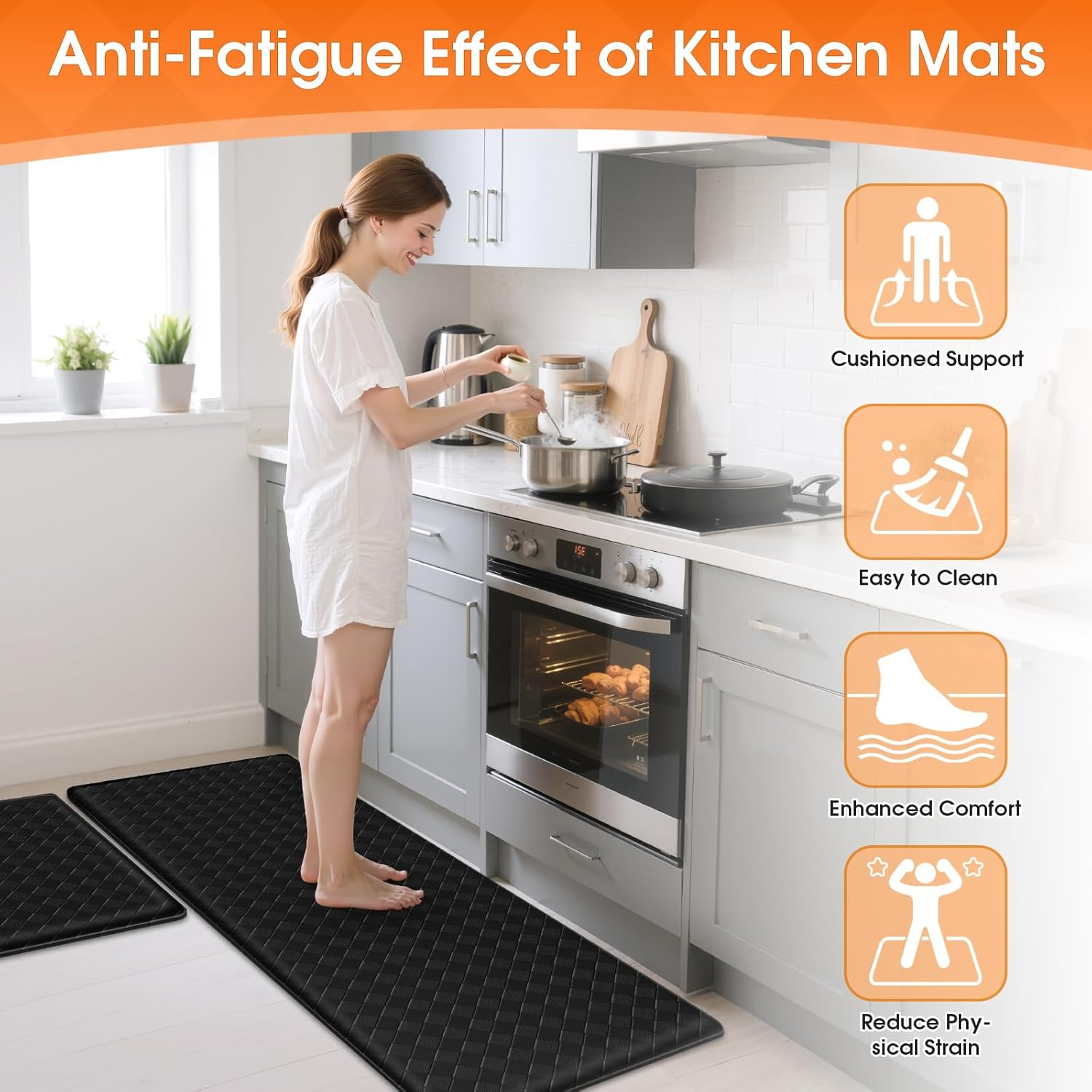
Why hard kitchen floors punish the body over years of standing
Standing on a tile or hardwood kitchen floor for twenty minutes feels like nothing. Standing on that same surface for two hours a day, across a decade of meal prep, dish duty, and holiday cooking marathons, is an entirely different equation. The human foot contains 26 bones, 33 joints, and more than a hundred muscles and ligaments, all designed to absorb shock through natural arch flexion and soft-tissue compression. Hard flooring short-circuits that mechanism by offering zero give, forcing the lower back, hips, and knees to take up a shock-absorption role they were never built to sustain.
Research out of the ergonomics program at Loughborough University has shown that prolonged standing on unyielding surfaces increases muscle fatigue in the lower limbs by roughly 30 percent compared to standing on cushioned matting. The data points to a cumulative effect: the discomfort most people notice around the forty-five-minute mark is not the beginning of the problem. It is the body finally running out of compensatory capacity after years of micro-trauma to the plantar fascia and lumbar stabilizers.
How anti-fatigue mat construction actually reduces strain
An anti-fatigue kitchen mat works through a deceptively simple mechanism: it introduces controlled, subtle instability underfoot. When the mat surface gives slightly with each shift of weight, the small muscle adjustments required to maintain balance promote continuous micro-circulation in the calves and feet. This low-level muscle engagement prevents the blood-pooling effect that causes swelling and discomfort during static standing. The mat does not eliminate the need to stand. It changes how the body responds to standing by keeping the postural muscles gently active rather than locking them into a fixed position.
The thickness and density of the cushion layer determine whether the effect actually lands. A mat that is too soft, similar to a gym-style foam pad, destabilizes the ankles and forces the body into corrective movements that fatigue entirely different muscle groups. A mat that is too firm simply replicates the hard floor with a thin veneer of give. The functional range lands between roughly 12 mm and 19 mm of total cushion depth, with a density that compresses about 15 to 20 percent under body weight. That narrow window is where genuine anti-fatigue benefit lives.
Breaking down the three material constructions that dominate the market
Within the anti-fatigue kitchen mat category, three material constructions cover the vast majority of products that perform reliably under daily use. Each carries distinct trade-offs in durability, feel, and chemical stability that matter in a room where spills, heat, and constant foot traffic are the norm.
A 100 percent polyurethane construction, commonly abbreviated as PU, delivers the most consistent cushioning across temperature ranges. It resists curling at the edges, handles kitchen spills without absorbing them, and maintains its elasticity for years. The trade-off is a higher unit cost, which tends to push this option toward higher-end residential kitchens and professional settings where the mat stays in place for multiple shifts.
PVC combined with a PU top layer creates a two-layer design. The PVC base provides floor grip and structural integrity while the PU surface handles comfort and spill resistance. This pairing shows up frequently in mid-tier commercial kitchens where mats need to survive frequent cleaning and heavy foot traffic without breaking down at the seams.
PVC with PU and SBR rubber adds a third element: the rubber component improves rebound characteristics and adds edge weight, which matters in open kitchen layouts where mats are not pinned against cabinetry on all sides. The rubber does introduce a mild odor during the first few days of use, a factor worth considering for anyone with chemical sensitivities.
|
Material Construction |
Comfort Durability |
Spill Resistance |
Edge Stability |
Initial Odor |
|
100% PU |
Excellent, 3+ years |
Absorbs nothing, wipes dry |
Good, minimal curl |
None |
|
PVC + PU |
Very good, 2 to 3 years |
Top layer resists, seams may wick |
Good when edges are beveled |
Very faint |
|
PVC + PU + SBR Rubber |
Good, 2+ years with rotation |
Good, rubber adds weight |
Best, stays put on open floors |
Noticeable for 3 to 5 days |
Getting the dimensions right by measuring workflow, not floor area
Kitchen mat sizing tends to go wrong in one of two ways. Either the mat is cut to fit a specific gap between cabinets, completely ignoring where the cook actually stands. Or it sprawls across so much floor that it becomes a trip hazard at the edges, curling upward after repeated kicks and vacuum bumps. The better method is to observe the real standing zones during a full meal preparation cycle. Mark the spots where feet stay planted the longest. These are typically in front of the sink, the primary prep counter, and the stove. Run a mat that connects these zones if the kitchen layout permits.
A restaurant kitchen in Atlanta took this approach during a renovation, mapping the prep team's movement patterns over three dinner services before finalizing mat dimensions. The result was a continuous run of matting that followed the natural flow from cold prep to hot line, eliminating the repeated step-on, step-off motion that had been causing the edge of the previous segmented mats to curl and lift after just a few months. Two years in, the replacement mats showed none of the edge degradation that had plagued the earlier layout.
Edge design and slip resistance as the overlooked safety layer
The edge of a kitchen mat causes more household falls than the surface of the mat itself. Beveled edges that taper gradually to floor level reduce the catch point for shuffling feet and rolling step stools. Mats with sharply cut 90-degree edges, regardless of how secure the backing feels, create a raised lip that eventually curls upward with repeated foot contact and washing cycles. A bevel angle of roughly 20 degrees provides a good balance between edge visibility and tripping prevention.
A mat's backing material and the floor type beneath it need to be matched with some care. Smooth PVC backings grip well on textured tile and sealed wood but can slide on polished stone or high-gloss concrete, particularly when a thin film of cooking oil has settled onto the floor. Textured rubber backings hold better on slick surfaces but can leave residue on certain vinyl and linoleum floors after extended contact. Testing a sample piece in the actual kitchen environment, preferably during a real cooking session, reveals fit issues that spec sheets alone will not catch.
Daily habits that extend the working life of a kitchen mat
Even the best-constructed kitchen mat degrades faster when small maintenance steps get skipped. A quick shake outdoors once a week removes flour dust, crumbs, and other dry debris before they grind into the surface underfoot. Wiping the underside monthly with a damp cloth prevents the buildup of a thin grease film that eventually transfers to the floor and compromises grip. Rotating the mat 180 degrees every few months, or switching its position between the sink and prep zones in a two-mat setup, evens out the wear pattern and delays the point at which a single compressed spot becomes a permanent dent.
For households where the kitchen mat also serves as a standing desk surface or a temporary dry-off zone for pets coming in from the yard, a secondary lightweight mat placed over the primary one during those non-cooking uses keeps the anti-fatigue mat from absorbing moisture and debris it was never designed to handle. This simple habit extends the mat's functional lifespan by a meaningful margin.
Dotcom Mats manufactures kitchen and anti-fatigue matting across all three of the material constructions covered above, with the production capacity to deliver consistent quality in both standard and custom dimensions. For restaurant operators, hotel procurement teams, and residential buyers who prioritize durability and material transparency, having a supplier that can specify exactly what goes into each layer removes a lot of guesswork from the selection process.
Table of Contents
- Why hard kitchen floors punish the body over years of standing
- How anti-fatigue mat construction actually reduces strain
- Breaking down the three material constructions that dominate the market
- Getting the dimensions right by measuring workflow, not floor area
- Edge design and slip resistance as the overlooked safety layer
- Daily habits that extend the working life of a kitchen mat