 EN
EN

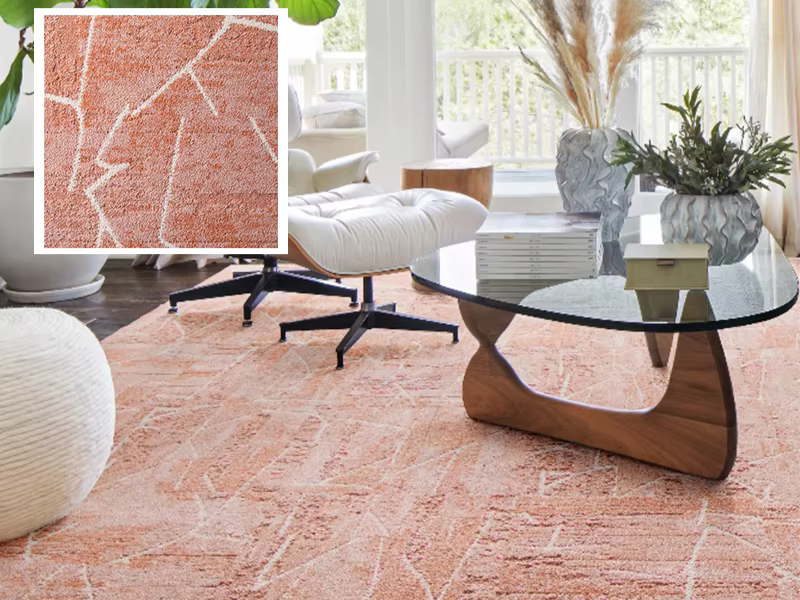
Mastering the normal carpet measurement method can reduce your decoration cost by at least 30%.Ordering a custom rug is an excellent decision for your home. Unlike mass-produced options, a custom rug fits your space perfectly and helps define the room's style with a unique personal touch. It brings greater harmony and intention to your interior design. However, the prospect of taking measurements can feel like the biggest obstacle, as mistakes at this stage can be frustrating and costly. This guide is designed to do more than just list steps; it will help you understand the entire process, enabling you to communicate efficiently and confidently with your manufacturer for a flawless result.
Gathering Your Tools: The Foundation of Accuracy
The journey to a perfect custom rug begins with preparation. Having the right tools on hand is not about having a full contractor's kit, but about ensuring precision from the start. Your essential toolkit should include a rigid metal tape measure, which is far superior to a cloth one for accurate long-distance measurements. For open-plan spaces or very long rooms, a laser distance measurer is a worthwhile investment for its ease and pinpoint accuracy.
Do not underestimate the power of simple tools. A notepad and pen—or a digital note-taking app—are crucial for writing dimensions down immediately; never trust numbers to memory. A roll of painter's tape or a chalk line becomes your secret weapon for visualization. Use it to mark the exact proposed perimeter of your rug directly on the floor. This visual mock-up is indispensable for judging true scale, proportion, and furniture alignment in a way numbers on paper cannot convey. Finally, use your smartphone or camera to take clear photos of the taped outline, the surrounding furniture, and the room from multiple angles. These images provide invaluable context for your design and manufacturing team.
Protocol for Measuring Step by Step
To eliminate guesswork and ensure consistency, follow this ordered sequence.
Start by preparing the space. Clear the area as much as possible, moving smaller furniture items to get empty access to the floor zone you need to measure. For large, heavy pieces, simply note their precise positions.
Next, measure the dimensions of the entire room or specific zone. Always measure the length and width from wall to wall at three different points—near each end and through the middle. This is especially important in older buildings where walls may not be perfectly parallel. A critical pro tip is to always measure from "bare floor to bare floor," avoiding baseboards and moldings which add extra inches. Record the smallest measurement you get for each dimension to guarantee your rug will fit without issue. Also, note the room's orientation; the rug typically looks most balanced when its longest dimension aligns with the room's primary flow.
A step most guides skip is mapping permanent obstructions. Precisely measure and record the location of floor vents, radiators, or air conditioning units. Mark the arc of door swings with tape to ensure clearance. Note any odd corners, columns, or built-in furniture. Sharing these details with your manufacturer from the outset allows them to design around these features, preventing unpleasant surprises after the rug is made.
Technical Adjustments for Different Room Layouts
The ideal rug size and placement are dictated by the room's function. For living rooms and seating areas, the goal is to "anchor" the furniture group. A cohesive look is achieved when all the front legs of primary seating pieces (like sofas and armchairs) rest on the rug. Measure the total footprint of your furniture configuration, then add 6 to 12 inches on all sides beyond that footprint.
In dining rooms, functionality is key. The rug must be large enough so that when chairs are pulled out for seating, they remain comfortably on the rug. The universal rule is to add a minimum of 24 inches (60 cm) to each side of your dining table's dimensions. For a standard 72" x 42" table, the minimum rug size therefore becomes 120" x 90".
For bedrooms, popular layouts offer flexibility. A "full coverage" look involves the rug extending 18-24 inches beyond the sides and foot of the bed, creating a luxurious frame. A "runner style" uses narrower rugs (typically 24"-36" wide) placed on each side of the bed, measured from the nightstand to the foot of the bed. For a simple accent, a smaller rug at the foot of the bed should be proportional to the bed's width.
Important Considerations Beyond the Tape Measure
Excellent measurements consider how life is lived in the space. Always consider traffic flow and door clearance. High-traffic pathways should be either fully on or fully off the rug to prevent tripping and uneven wear. The "breathing room" rule suggests leaving 8 to 18 inches of bare floor showing around the rug's perimeter, which helps frame the space and makes the room feel larger.
Furthermore, understanding material behavior is a crucial technical aspect. Different materials—wool, synthetic blends, natural fibers—have different levels of stretch, shrinkage, and how they lie flat. Discussing your specific room environment and usage with your manufacturer ensures they recommend a material whose technical properties, like pile density and backing, will perform best for you.
Top Measurement Mistakes to Avoid
Being aware of common pitfalls will save you time and hassle. First, avoid the single-measurement trap. Always measure lengths and widths from multiple points and verify them two or three times. Remember to measure from the bare floor, not from the top of the baseboard, as this gap can distort your numbers. Account for the "visual shrink" effect: furniture placed on top of a rug makes it appear smaller, which is why the tape-outline method is so valuable.
Never overlook permanent fixtures like floor vents, heaters, or door swings; these are not optional and must be included in your planning. Finally, do not assume perfect symmetry. Rooms and corners are rarely perfect 90-degree angles, so measure each side independently.
Collaborating with Experts: Turning Your Measurements into Art
This is where your meticulous preparation meets professional execution. Submitting your precise measurements, sketches, and photos to an experienced manufacturer like Dotcom Mats transforms your data into a perfect finished product. With 18 years of specialized experience in custom rugs and mats, their technical team provides invaluable guidance.
A strong partnership offers several key benefits. They provide pre-production consultation, reviewing your measurements and layout to offer professional validation or suggestions before production begins. They offer technical material guidance, advising on optimal pile height, fiber type, and backing to achieve the perfect balance of durability and aesthetics for your specific room's purpose. Thanks to their efficient production systems and solid manufacturing capabilities, you can be confident the rug produced will match your specifications to the millimeter, accounting for material behavior during construction. For complex or unusually shaped spaces, their professional business team can propose custom shapes or tailored solutions that standard operations cannot.
The client testimonials on their site consistently highlight satisfaction not only with the vibrant colors and great quality but with the excellent customer service and problem-solving support throughout the entire journey—from the first quote to punctual delivery.
Investing in a custom rug is a rewarding endeavor. Your careful measurements define the project's potential. By partnering with a competent, seasoned manufacturer like Dotcom Mats, you fully realize that potential. You gain more than a supplier; you gain a dedicated partner who expertly manages the intricate pathway from artistic design to seamless production. The result is more than a rug—it's a long-lasting centerpiece, crafted to your life and sure to bring satisfaction for years to come.