 EN
EN

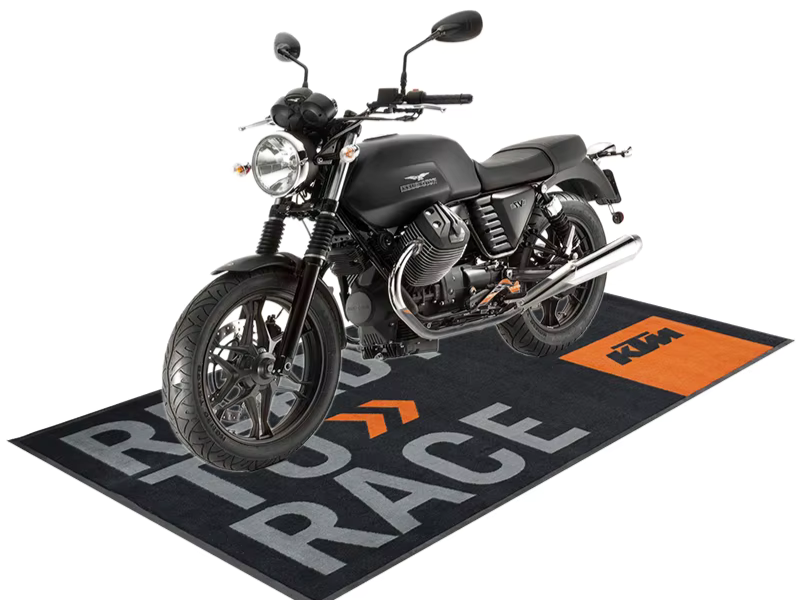
Working on your motorcycle should be about the thrill of the project, not the frustration of chasing a slipping mat around the garage. A sliding motorcycle pit mat is more than just an annoyance; it's a genuine safety hazard and a productivity killer. Whether you're performing a routine oil change or a more intricate repair, stability is non-negotiable. The last thing you want is for your mat to shift as you apply torque to a bolt or as you move a heavy bike. Fortunately, with the right knowledge and preparation, you can create a perfectly anchored workspace. This guide will walk you through the science of slip resistance, offer actionable solutions, and explain how professional-grade tools can permanently solve this common problem.
Why Your Motorcycle Pit Mat Sells Itself Short
The first step to solving the problem is understanding why it happens. Most mats are designed with one primary function in mind: to protect the floor and provide a cushioned surface for you to kneel on. While these features are important, they often overlook the critical need for lateral stability, especially when dealing with the weight and movement of a motorcycle.
Several key factors conspire to make your mat slide. The floor type is a major one; a smooth epoxy-coated floor or a worn concrete surface offers very little natural friction. The backing of the mat is another critical factor. Some have low-quality rubber that hardens over time, while others feature fabric or felt that acts more like a slider than a gripper. The most significant variable, however, is what gets onto the mat. Oil drips, grease, brake fluid, and even just water drastically reduce the friction coefficient of any surface, turning your mat into a makeshift hoverboard. Finally, the weight distribution and movement of the motorcycle itself act as a powerful sliding force. As you mount and dismount the bike, push it on and off the stand, or simply shift your weight during work, the mat is subjected to lateral forces it wasn't designed to handle.
Ignoring this issue forces you into a constant, subconscious dance of repositioning the mat and adjusting your stance, which is distracting and breaks your focus on the task at hand. This constant interruption turns a simple maintenance job into a tedious chore.
Effective DIY Solutions to Anchor Your Mat
Before investing in new equipment, you can often improve your current setup with some clever, low-cost tricks.
The simplest upgrade is to thoroughly clean both sides of your mat and the floor itself. Dirt and dust act as tiny ball bearings under the mat. Use a degreaser to remove any oily residue from the mat's backing and sweep the floor area thoroughly. A clean, dust-free connection is a more stable one.
For mats with a smooth backing, you can add your own grip. Creating a DIY non-slip surface is a popular and effective approach. You can purchase self-adhesive, high-friction tape designed for stairs or toolboxes and apply strips or a grid pattern to the underside of your mat. Alternatively, apply a liquid rubberized coating, often found in spray cans marketed as tool handle or tool dip coatings, to the mat's backing. This creates a textured, high-tack surface that grips concrete exceptionally well.
The most straightforward physical method is to use strategic barriers. Placing your mat against a wall, a heavy toolbox, or even the wheel of another vehicle can physically block it from moving in one direction. For a more contained approach, some enthusiasts place their mat inside a low-profile frame, such as a small wooden border or a couple of heavy-duty angle irons anchored to the floor.
Lastly, consider creating a dedicated, enhanced zone for your work area. Apply a commercial-grade anti-slip paint or epoxy grit to a specific section of your garage floor. This creates a permanent, high-traction zone where you can place your mat, giving it a much better foundation to grip onto.
Choosing the Right Motorcycle Pit Mat from the Start
While DIY fixes can work, the most effective long-term strategy is to start with a mat that is engineered for the job. This is where understanding the features of a professional-grade motorcycle pit mat becomes essential. Not all mats are created equal, and the right design choices make all the difference.
The true star of a slip-resistant mat is its backing. Look for terms like "non-skid," "high-traction," or "natural rubber compound." A premium backing is designed to grip like a tire on asphalt. It should be made of a soft, pliable rubber that conforms to microscopic imperfections in the floor rather than sitting rigidly on top of them. This material provides a strong static hold, resisting the initial force that causes sliding.
A quality motorcycle pit mat should also feature a beveled or lipped edge. This design is not just for aesthetics; it serves as a physical barrier that catches the wheel of your bike or the leg of your stand, helping to prevent the mat from being pushed out from under the load. It acts like a small curb, containing the movement within the mat's area.
Integrated features are another hallmark of a well-designed mat. Some advanced mats come with pre-installed grommets or anchor points. These allow you to use simple fasteners to secure the mat directly to a wooden subfloor or to tie it down using weights, providing absolute security for long-term workshop setups or heavy-duty use.
Leveraging Professional Design and Partnership
For businesses, repair shops, or serious enthusiasts, the ultimate solution often lies in a custom partnership with a specialized manufacturer. This is where a company with deep experience in the field can provide game-changing value. A manufacturer that focuses on tailored solutions understands that a generic mat is rarely the perfect answer.
By partnering with a manufacturer that has a long track record, such as the 18-year history of a company like Dotcom Mats, you gain access to expertise in material science. They can recommend the ideal rubber compound that remains pliable in cold weather and grippy in heat. They understand how to engineer backing patterns that maximize surface contact and friction on specific floor types, from polished concrete to garage tiles.
A true partner goes beyond just selling a product. They work with you to understand your specific workflow, the types of maintenance you perform, and the challenges of your physical space. This collaborative approach allows for the creation of a truly custom motorcycle pit mat that may include unique dimensions to fit a specific bay layout, reinforced areas for jack stands, or even integrated branding and oil-resistant logos that withstand the harsh workshop environment. Their reputation is built on solving real, tangible problems like mat slippage, transforming a safety concern into a non-issue and allowing mechanics to focus solely on their craft. The principle is simple: when your maintenance operation runs smoother and safer, their role as a committed ally is fulfilled.
By combining immediate DIY fixes with an informed investment in the right equipment, you can permanently banish the annoyance of a sliding mat. The result is a safer, more efficient, and more enjoyable workspace where you can direct all your attention to the motorcycle in front of you.