 EN

Turning a Mat Into a Real Practice Tool
A golf putting mat only helps when it is used with a purpose. Rolling putts without a target or a plan can feel productive, but it rarely lowers scores. The value of a home putting mat comes from repeatable practice on a consistent surface. That allows a player to isolate stroke mechanics before adding more variables on a real green.
The first step is to define what the practice session should improve. It could be starting direction, distance control, or a pre-putt routine. Without that focus, the mat becomes just a carpet strip. With a clear goal, the same flat surface turns into a measuring tool.
Start With Straight Putts Before Anything Else
Most putting problems show up on straight putts before they appear on breaking putts. A player who cannot start the ball on line will struggle regardless of green reading skill. A home mat is perfect for this because the surface is predictable. Set a ball marker or small cup at one end and practice putts of three to six feet.
Watch the first foot of the roll. If the ball leaves the putter face heading left or right of the line, the stroke is not repeating. Work on a short, controlled stroke until the ball starts on the intended line more often. This basic drill is unglamorous, but it builds the foundation for every other putting skill.
Build a Repeatable Setup Routine
A putting mat can also be used to train the setup without the distractions of a golf course. Ball position, eye line, grip pressure, and stance width should feel the same on every putt. The mat provides a quiet place to check those details.
Use an alignment line on the ball or a small mirror to confirm eye position. Place the feet the same way each time. The routine should be simple enough to repeat under pressure. When the setup becomes automatic, the stroke has a better chance of staying steady.
Use Alignment Aids Without Becoming Dependent
Alignment rods, chalk lines, and ball markings are helpful on a putting mat. They give immediate feedback about aim and stroke direction. The risk is that a player becomes dependent on them. On a real green, those aids are usually not available.
A good approach is to use the aid for part of the session, then remove it and hit the same putts. This transfers the feel to real conditions. The goal is not to make practice easier. The goal is to make the correct movement feel normal without the aid.
Vary Distance and Green Speed
Home putting mats often run faster or slower than real greens, depending on the material. That difference is not a problem if the player adjusts. Practice putts of varying lengths, from short tap-ins to longer lag putts. Change the target distance frequently so the stroke does not lock into one speed.
|
Drill Type |
Main Skill |
Setup |
Common Mistake |
|
Straight line drill |
Start direction |
3 to 6 foot putts |
Swinging across the ball |
|
Gate drill |
Face control |
Two tees at putter width |
Hitting the gate |
|
Lag distance drill |
Speed control |
Mixed 15 to 25 foot putts |
Over-accelerating |
|
Eyes closed drill |
Feel and tempo |
Short putts |
Peeking early |
This table gives a few ways to vary practice without needing a large space. Even a narrow mat can support these drills if the target is set up carefully.
Track a Few Basic Numbers
Keeping a simple record makes improvement visible. Count how many putts out of ten start on line or finish inside the target distance. Over several sessions, those numbers show whether the practice is working. They also prevent the player from spending too much time on one weakness while ignoring another.
For example, a player may notice that short putts improve quickly but lag putts stay inconsistent. That signals a need to spend more time on distance control. The mat does not have to simulate every green condition. It only has to reveal the stroke tendencies that repeat over and over.
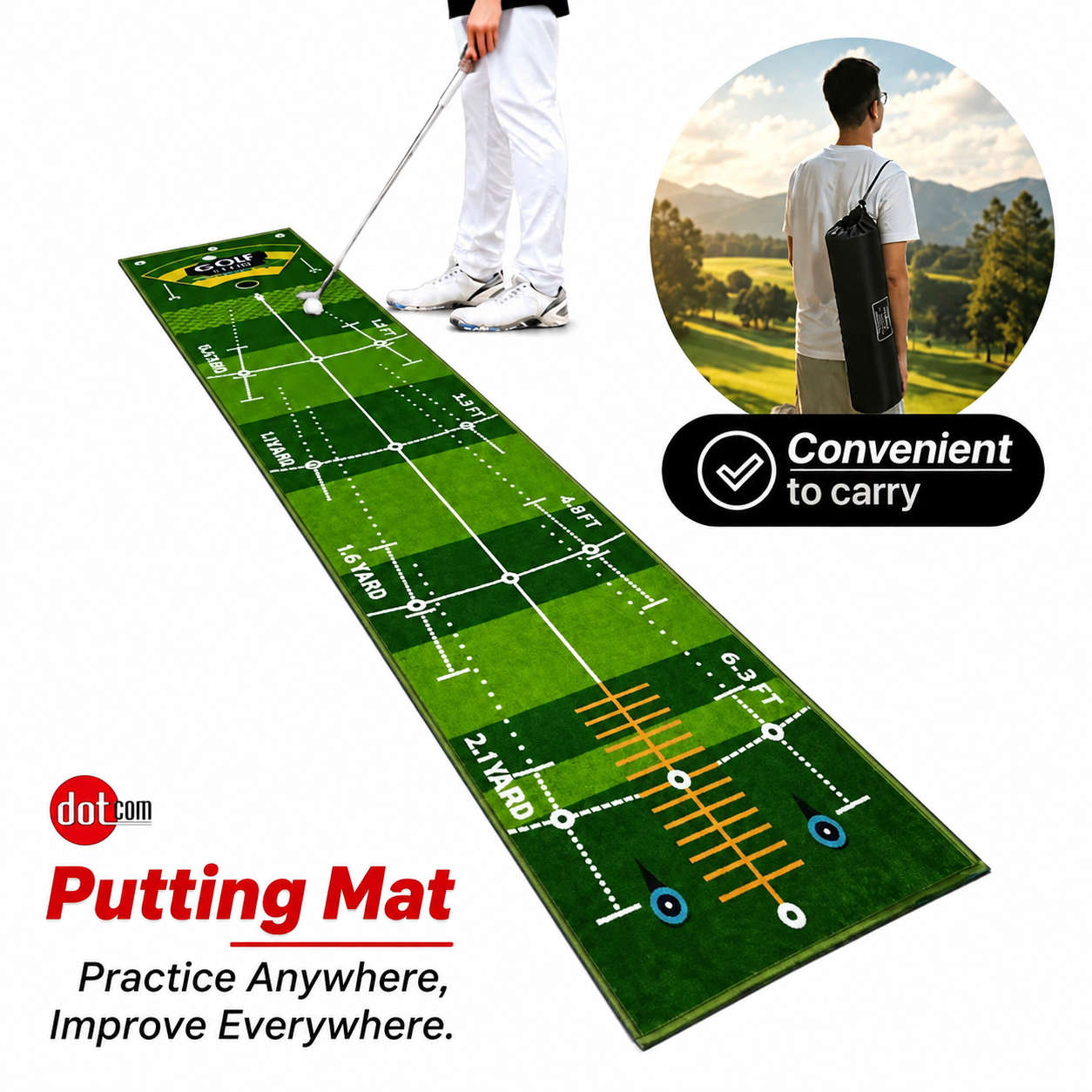
Dotcom’s golf putting mats are produced with consistent roll characteristics, which helps players trust the feedback they get during practice. A stable surface makes it easier to separate a stroke problem from a mat problem.