 EN

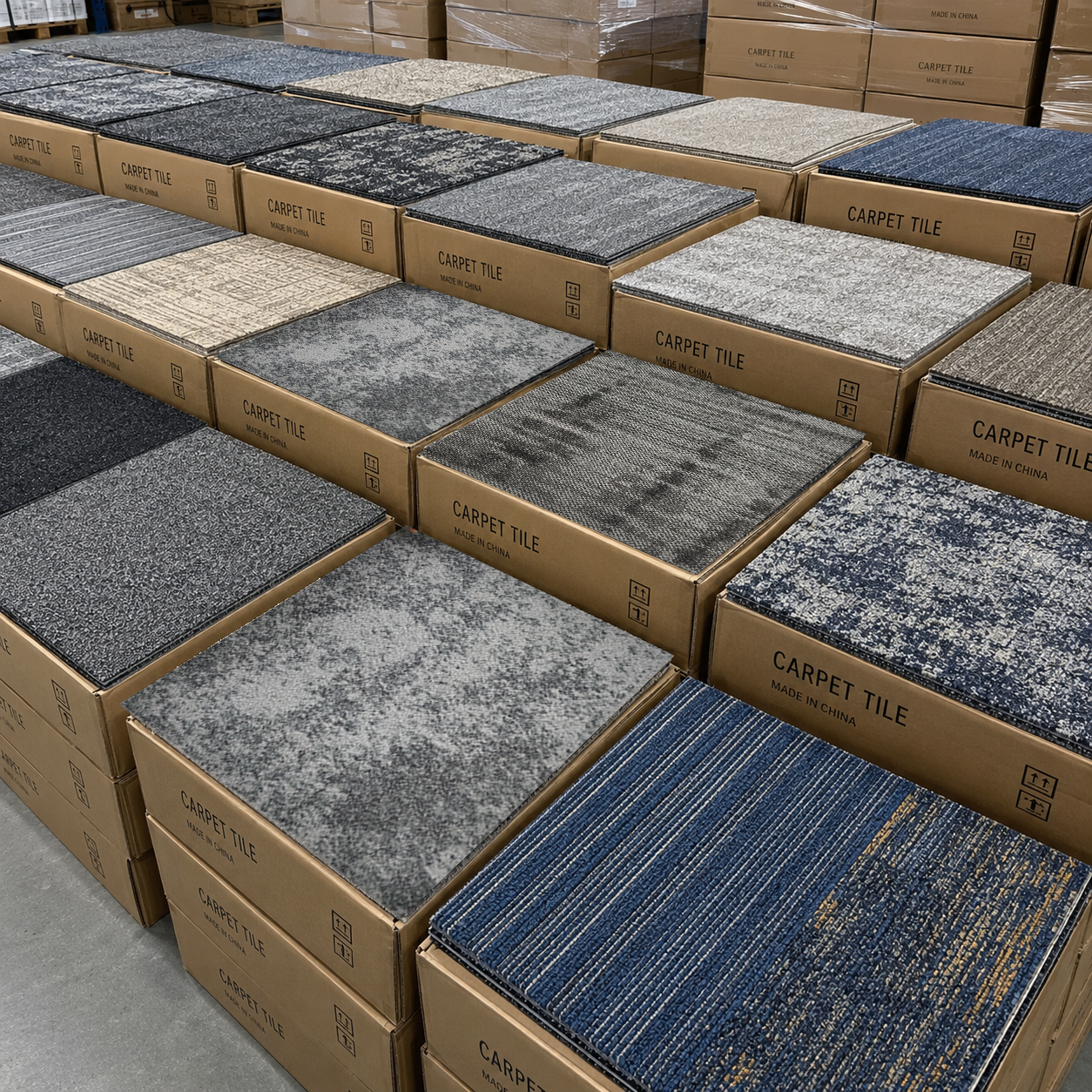
Lower Upfront Cost Is Not the Only Advantage
Commercial carpet tiles often carry a lower initial material cost than broadloom carpet, but the real savings run deeper. Tile installation reduces the amount of cutting and fitting required around irregular spaces. That means less labor time and fewer wasted offcuts. For a business, time on site translates directly into money.
The modular format also changes how a space is maintained. A stained or damaged section of broadloom can require a large patch or full replacement. With carpet tiles, a few pieces can be lifted and swapped without disturbing the rest of the floor. That ability alone makes the product attractive for offices, clinics, and retail spaces that cannot close for long repairs.
Replacement and Waste Run Differently With Tiles
Traditional carpet is sold and installed in wide rolls. Any doorway, pillar, or curved wall creates waste. On a large commercial floor, those offcuts add up. Carpet tiles arrive in smaller, uniform squares or planks. Installers can arrange them around obstacles more efficiently, so less material goes into the bin.
Replacement follows the same logic. If a coffee spill leaves a permanent mark, a facility team can replace only the affected tiles. That avoids the cost of pulling up an entire room. The table below compares the two approaches.
|
Factor |
Broadloom Carpet |
Commercial Carpet Tiles |
|
Initial material cost |
Often lower per area |
Slightly higher per area |
|
Installation labor |
Higher |
Lower |
|
Waste from cutting |
Higher |
Lower |
|
Spot replacement |
Difficult |
Simple |
|
Design flexibility |
Limited by roll width |
High with mixed layouts |
The numbers shift from project to project, but the pattern is consistent. Tiles reduce waste and make future changes less expensive.
Installation Around Furniture and Cables
Modern offices rarely start with an empty room. Desks, power poles, data cables, and partitions are often already in place or being installed at the same time. Carpet tiles can be cut around these elements more easily than a wide roll. In many renovation projects, work can happen in zones instead of shutting down an entire floor.
This is especially useful for businesses that cannot vacate during renovation. A bank branch or dental office can keep part of the space open while one section is retiled. The modular format allows a phased schedule that reduces downtime. That is a cost advantage that does not show up on a simple material quote.
Maintenance and Staining in Real Buildings
Carpet tiles are not magic. They stain, wear, and show traffic patterns just like any carpet. The difference is how easily the problem can be contained. A single damaged tile can be cleaned or replaced without a visible seam running across the room. Many facilities keep spare tiles from the original order for this reason.
The type of backing also matters. Tiles with a stable backing resist curling and stay flatter under rolling chairs. That reduces edge wear in high-use areas. Routine vacuuming and periodic extraction cleaning still matter. A tile floor will only remain cost-effective if it is maintained like a real carpet asset.
When Carpet Tiles Are Not the Best Fit
There are situations where broadloom carpet makes more sense. Large, open rooms with few obstacles may install faster as a single roll. Some luxury settings prefer the uninterrupted look of wall-to-wall carpet. Tiles also have more seams, which may be visible if the floor is not installed carefully.
Moisture is another consideration. Carpet tiles do not tolerate standing water well unless specified for that use. Subfloors with excessive moisture can cause adhesive problems. In those cases, the issue should be corrected before installation. Knowing these limits helps a business avoid choosing tiles for the wrong reason.
Specifying for Heavy Traffic Without Overspending
A cost-effective carpet tile program does not mean buying the cheapest tile available. It means matching the product to the traffic level. Entryways need a denser, lower-profile tile. Private offices can use a softer, more textured option. Hallways and lift lobbies usually need a tile with a strong backing and good stain resistance.
During a phased office refresh, one project team kept the same color range across the space but specified different tile grades by zone. That approach controlled cost while avoiding premature wear in the busiest areas. It also made future replacements simpler because the visual palette stayed consistent. Dotcom’s carpet tile range supports this kind of zone-by-zone specification, with attention to backing stability and color consistency.