 EN

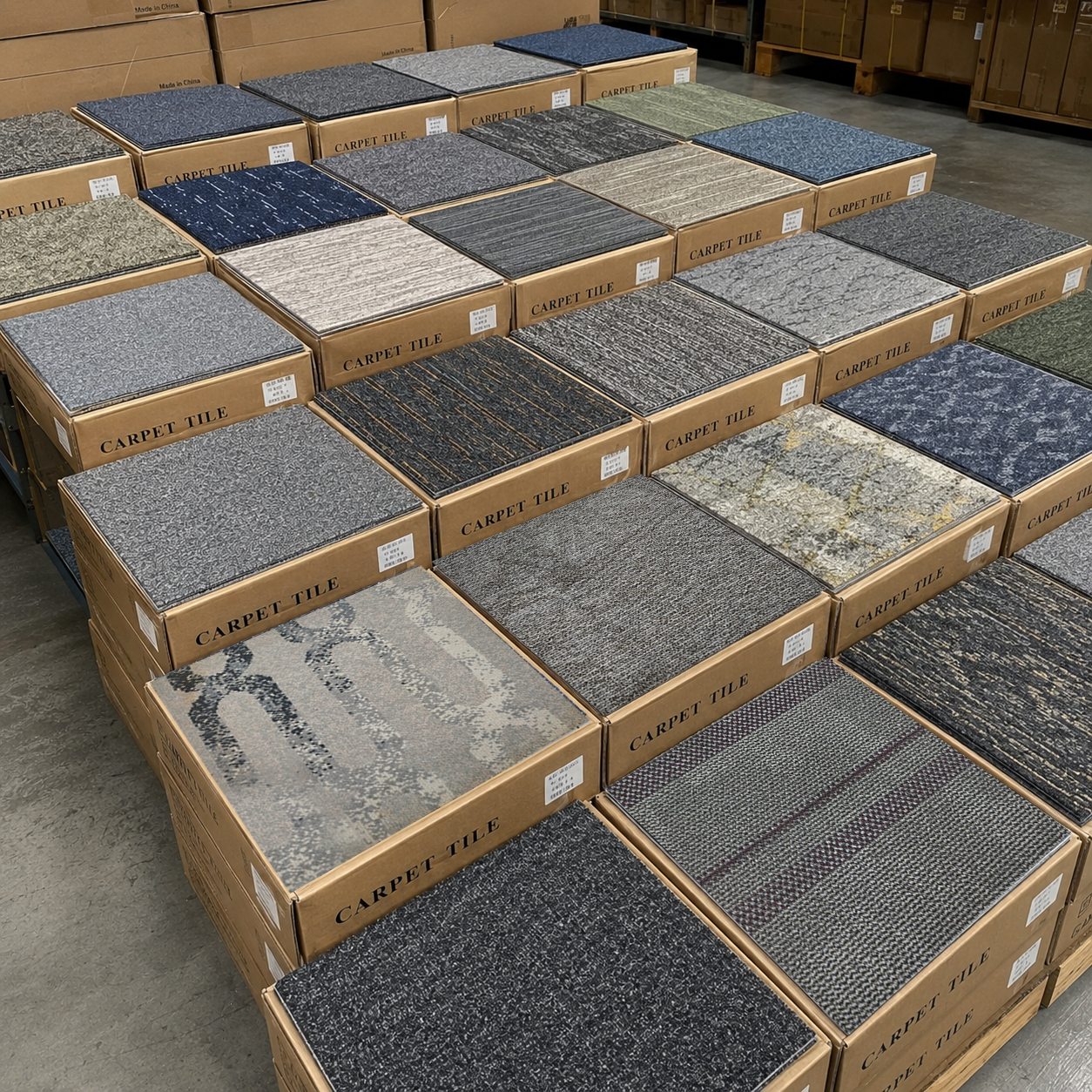
Outdoor carpet tiles are not indoor tiles moved outside. They face rain, sun, dirt, and temperature swings that indoor products rarely see. A tile that looks good indoors can fade, warp, or become slick after a few months on a patio, balcony, or walkway.
If you are planning an outdoor flooring project, the first thing to understand is that safety depends on two different things: the tile’s backing and the tile’s surface texture.
Two Types of Anti-Slip You Need to Know
Many buyers assume that “anti-slip backing” means the tile is safe to walk on. In reality, there are two separate slip risks outdoors.
The first is the tile moving across the floor. Outdoor bases are often concrete, stone, wood, or tile. When the base gets wet, a carpet tile without a reliable backing can drift out of place. This creates uneven seams and trip hazards. A tile with a high-grip backing holds its position against the base and reduces shifting, especially on balconies and sloped surfaces.
The second is foot slip on the tile surface. Water on a smooth surface creates a slip risk underfoot. To manage this, outdoor carpet tiles need an open or textured surface that allows moisture to drain away quickly. A tile can have excellent backing grip but still be slippery if the surface stays wet.
So when you choose outdoor carpet tiles, look for both:
A backing that grips the floor and prevents movement.
A surface structure that drains water and does not become slick when wet.
What Separates Outdoor Carpet Tiles from Indoor Tiles
Indoor carpet tiles are designed for controlled environments. Outdoor tiles need to handle moisture, UV exposure, and temperature changes.
A useful comparison:
|
Feature |
Indoor Carpet Tile |
Outdoor Carpet Tile |
|
Backing grip |
Moderate |
High |
|
Drainage |
Low |
High |
|
UV resistance |
Low to moderate |
High |
|
Surface texture |
Softer underfoot |
More open or textured |
|
Moisture tolerance |
Limited |
Better |
This table is a general guide, not a promise. Even outdoor-rated tiles will gradually fade in direct sun. The goal is to choose a tile that performs well over several seasons, not one that claims to be indestructible.
Key Features to Check Before Buying
If you are evaluating outdoor carpet tiles, ask about these five things:
Backing type
Look for a backing that grips the base and provides stability on uneven ground. Solid rubber backings can trap moisture, while backings with channels or a breathable pattern allow better air movement.
Surface drainage
A low-profile, open structure dries faster and reduces the chance of mildew. Avoid dense, plush surfaces that hold water.
UV resistance
Tiles with good UV resistance hold their color longer. Expect some fading over time, but avoid tiles that become brittle or chalky quickly.
Temperature stability
The tile should not curl or shrink excessively when exposed to heat and cold. A stable backing keeps seams tight and prevents a buckled look.
Weight and edge support
Outdoor ground is rarely perfectly flat. A tile with enough weight and firm edge support will lie more predictably over brick joints, concrete texture, or balcony drainage slopes.
Matching the Tile to the Space
Not every outdoor area needs the same product.
A covered balcony with little rain may work with a softer, more decorative tile.
An open patio or pool surround needs better drainage and stronger grip.
Stairs and ramps require the highest slip resistance, especially when wet.
Maintenance also matters. Outdoor areas collect dust, leaves, and pollen. Choose tiles that can be swept, hosed, or lightly scrubbed. If the surface traps debris, even a good anti-slip backing will not keep the area looking clean or safe.
Installation Tips for Better Performance
Proper installation makes a big difference outdoors.
• Start with a clean, reasonably level base. Remove loose debris and standing water before laying tiles.
• Lay tiles in the direction of drainage where possible.
• On balconies or slopes, consider edge trims or perimeter fastening to reduce movement in wind.
• Leave small gaps if the tile needs to expand and contract with temperature changes.
• Check the tile after the first heavy rain to see if any pieces shift or hold water.
What to Do If You Cannot Find a Standard Outdoor Tile
Not every supplier lists outdoor carpet tiles as a standard product. In some cases, a manufacturer can produce tiles with outdoor-specific backing and surface treatment as a custom order.
If you have a project in mind, it is worth asking the supplier directly:
• Can the tile be made with an outdoor-rated anti-slip backing?
• What surface options are available for wet areas?
• Can the tile handle direct sun without excessive fading or curling?
• What is the recommended installation method for balconies, patios, or walkways?
A professional supplier should be able to give you clear answers instead of simply saying “yes, it works outdoors.”
At Dotcom, we manufacture carpet tiles for a range of commercial applications. If you are looking for outdoor carpet tiles with anti-slip backing, contact us with your project details. We can discuss whether a standard product fits your needs or whether a custom outdoor solution is the better option.