 EN

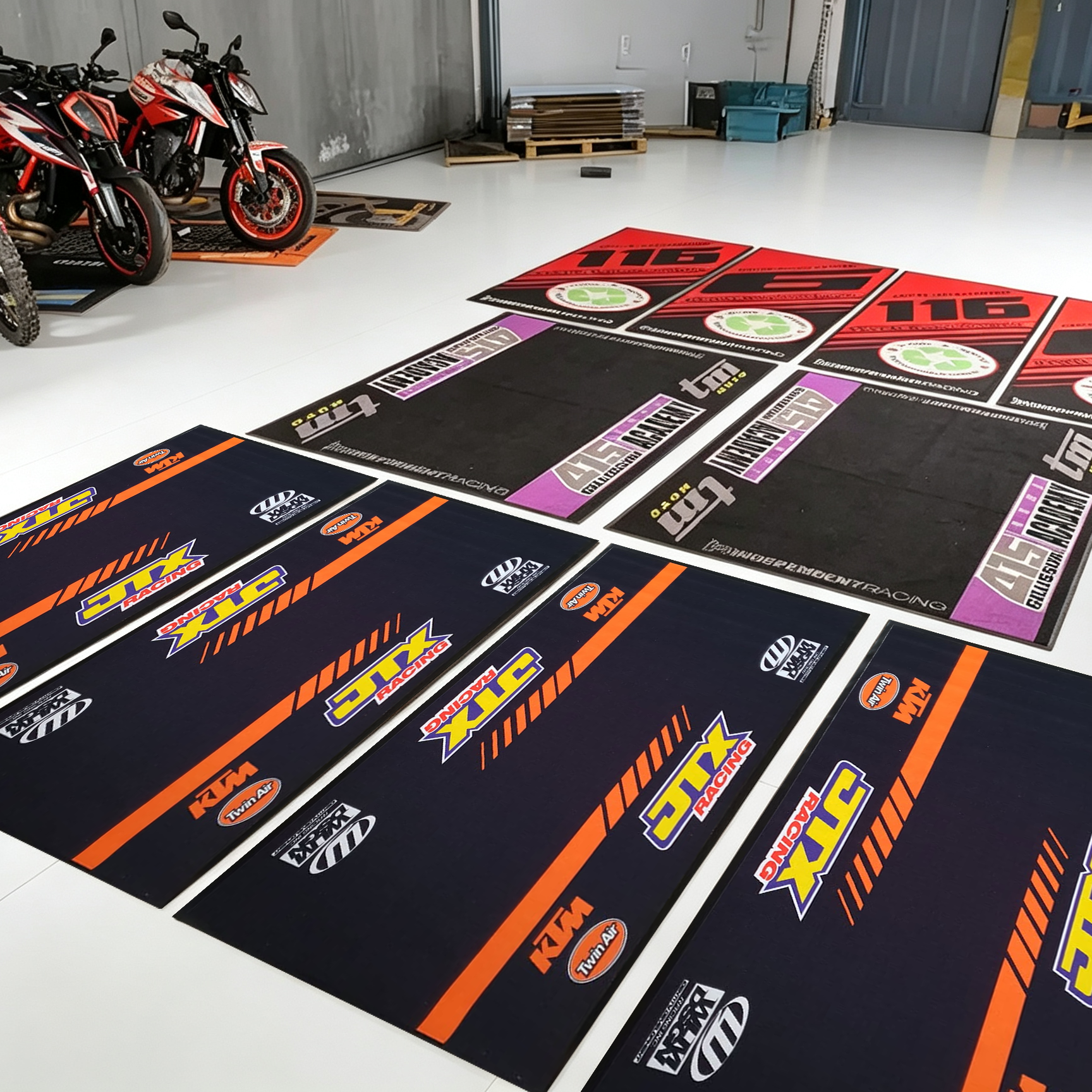
The Risk Starts When the Kickstand Meets the Floor
Parking a motorcycle seems simple until the ground surface works against the rider. A kickstand on a smooth, wet, or dusty floor can slide outward, especially when the bike is loaded or the ground has a slight slope. A non-slip motorcycle mat adds a more predictable surface between the bike and the floor.
That predictability matters in garages, carports, and workshops where oil stains, water, and loose debris are common. Without a stable base, the kickstand may dig in or slip without warning. The mat helps create a defined parking spot and reduces the chance of the bike tipping during parking.
Surface Friction and What It Means for a Heavy Bike
Friction is the force that keeps two surfaces from sliding across each other. For a motorcycle, the kickstand footprint is small, which concentrates the bike’s weight on a limited area. On a polished concrete floor, that small contact patch may not generate enough friction to stay put.
A non-slip motorcycle mat increases friction in two ways. The top surface grips the tires and kickstand. The backing grips the floor. If either side slips, the mat loses value. A high-friction backing with a textured surface works as a system, not as a single feature.
Oil, Water, and the Reality of Garage Floors
Garage floors are rarely dry and clean for long. Motorcycles bring in water after rain, and small oil drips are common under engines. That combination creates a film that reduces friction even on surfaces that look safe. A mat left on an oily floor may slide because the backing cannot reach the concrete.
The best mats resist oil absorption and provide drainage channels on the surface. Those channels let water move away from the tire contact area. The mat itself should be cleaned regularly, because a slippery film on top will eventually reduce grip regardless of the material.
Mat Movement as a Hidden Hazard
A motorcycle mat that moves when the bike is parked becomes a hazard. The rider may step off expecting a stable surface, only to feel the mat shift underfoot. That sudden movement can cause a loss of balance, especially when the rider is still holding the bike.
Backing design is the main defense against mat movement. Some mats use a pattern of small grips or a slightly tacky surface to hold the floor. Others use weight and edge stiffness to stay in place. The table below compares typical backing approaches.
|
Backing Type |
Grip on Concrete |
Grip on Epoxy |
Oil Resistance |
Notes |
|
Smooth PVC |
Medium |
Low |
Good |
May slide when wet |
|
Textured rubber |
High |
Medium |
Good |
Best all-round |
|
Tacky backing |
High |
High |
Medium |
Collects dust |
|
Heavy rigid mat |
Medium |
Medium |
Good |
Relies on weight |
What Non-Slip Backing Actually Does
Non-slip backing is not just a rough texture. It works by increasing the contact area and creating small mechanical locks against the floor. On textured concrete, those locks are strong. On very smooth epoxy, even a good backing may struggle if dust or water sits underneath.
For that reason, the floor should be swept before the mat is placed. A thin layer of dust can act like ball bearings under the mat. In a busy workshop, that simple step makes the difference between a mat that stays put and one that drifts during the day.
When a Motorcycle Mat Is Not Enough
A non-slip mat helps with many parking risks, but it cannot fix every problem. A steep slope, a heavily damaged floor, or a bike loaded beyond its normal balance range can still cause tipping. The mat should be seen as one part of a safe parking routine, along with selecting a level spot and using the side stand correctly.
In one garage, a motorcycle mat was placed over a slightly sloped area near the door. The mat stayed flat and the textured surface held the rear tire, but the slope still made the bike lean more than expected. The better solution was to relocate the parking area to a level section and use the mat there. The mat improved stability, but it could not rewrite the floor geometry.
Dotcom’s motorcycle mat production includes attention to backing grip and surface texture. That focus helps create a more secure parking surface in typical garage conditions.