 EN
EN

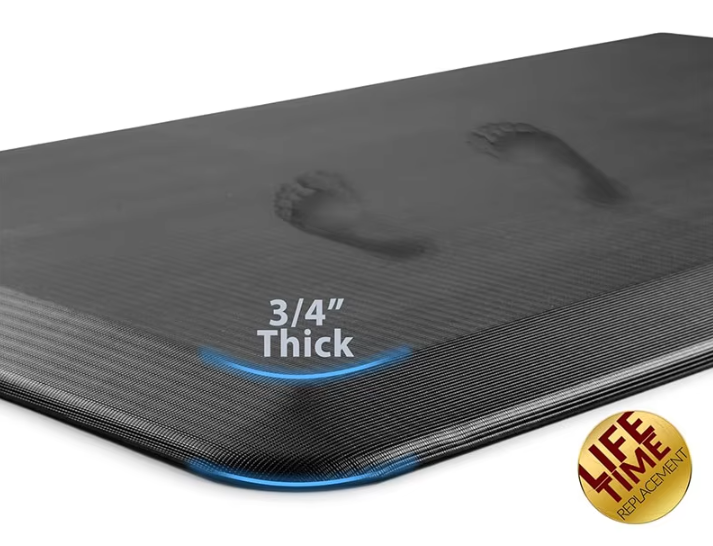
Let's start with the positive aspects of small kitchens; they are warm and inviting, efficient, and each square inch of space is utilized to maximum potential. One of the personal touches homeowners can add to their small kitchens is to put in a kitchen mat. Kitchen mats can add an inviting touch, but if the mat is the wrong size, it can make a kitchen feel smaller, and it can even become a tripping hazard. That is why the size of a mat is equally as important as the mat design. For the past 17 years, space customization has been a focus for Dotcom, and they have been able to gain an understanding of what is required with customized kitchen mats. Creating customized kitchen mats gives Dotcom the ability to produce kitchen mats that ensure they protect homeowners from potential hazards, while also adding to the ambiance of the kitchen space.
The Golden Rule: Measure Before You Buy
Taking accurate measurements is one of the most important things you can do before heading out to shop. Get out the tape measure. It is important to scan a kitchen rather than look for one big area mat to cover the entire floor. In a kitchen, you'll likely be moving your feet at a "station" when washing dishes, prepping food, or cooking.
When moving water, it is necessary to measure the width of the cabinet you are standing at. The most effective mat sizes are from 24 inches wide (the width of a sink) to 18 inches with a standing zone 36 inches deep. The stovetop area is measured the same as above. You do not want the mat to disappear under the stove or be too close to the front of the range. Keep these measurements for your own reference. If a mat is even an inch too big, it can feel terrible to walk or work in a compact kitchen.
Different Shapes for Small Kitchen Mats
Rectangular kitchen mats might be the most common kitchen mats, but they'll be the most boring and won't utilize your space very well. Your kitchen mat should be organized according to the shape and design of your kitchen.
Runner Kitchen Mats
If your kitchen is a galley style kitchen, a slim runner is perfect. Go for a mat of 24 30 inches wide to define the walkway and not overwhelm the kitchen.
Contour or Arc Kitchen Mats
If you need a kitchen mat to go in front of your sink, this is a great option. These mats have a straight back that fits snuggly against the cabinet, and a front that has a curve so that it won't get in the way of your feet. This design uses the minimal amount of material to sleekly maximize the area where you'll be standing.
Custom Cut Kitchen Mats
If you want to utilize your space 100%, a custom cut mat is a great option. This option is great for custom and unique spaces, L shape countertops, and to fit around a kitchen island leg for a professional look.
Finding the right size mat for your purpose is tricky a mat that is too big is just as problematic as one that's too small. A small mat shifts with each step, and doesn't offer any real comfort or spill protection. So how to you find that perfect size?
A good general guideline is that you should be able to step fully onto the mat in any direction you approach the sink or stove. The mat should feel as though there is enough space to border your feet, with a distance from the edge of the mat to your feet by several inches. This spacing will ensure there is plenty of room visually and for the mat to function, avoiding a snag when you open the dishwasher or oven. An island of comfort is the goal.
Materials and Thickness: The Invisible Size Factors
The type of materials and pile height of a mat can influence the perceived size of the kitchen. In very compact areas, a mat that is too thick can dominate the floor and appear bulky. In contrast, low profile materials can create a neater, more spacious visual effect. There are several excellent options: a flat weave cotton mat, a thin memory foam mat with a top layer that is tight, and classic vinyl backed rugs. They cushion the floor without adding visual weight. These materials are also easier to clean and create less of a trip hazard. This is where Dotcom really shines in giving you tailored materials advice to meet your need for comfort and the slim profile your small kitchen requires from a mat.
Color and Pattern: Design to Create Space
Colors and patterns are a strong tool for manipulating perceived space. In a very small kitchen, a bold and patterned kitchen mat can be a beautiful feature, but can also make the floor space look too busy and fragmented.If you would like to achieve a more open feel, try these techniques:
Use The Same Or Similar Flooring
A mat that is similar in color to your flooring will make your space look bigger and more cohesive.
Use Lighter Colors
Light colors such as grey, beige, and light blue will help make the space feel bigger and brighten the room by reflecting light.
Choose Simple, Elongated Patterns
If you like patterns, you can go for simple patterns. Place your mat with the pattern running parallel to the longest side of your kitchen as that can visually stretch the room.
Working with a custom provider means you can decide not just the size, but the color and pattern of your mat to achieve a perfect combination of style and space enhancing goals.
Your Mat Is Your Perfect Fit
That small kitchen should not hold you back from getting the kitchen mat you want. It is about good design with precise measurement, the right shape, colors, and materials to help the space feel bigger.
The perfect mat for your kitchen should look as if your kitchen has always had it. It should feel good on your feet and protect the floor. It should be ordered and cozy and add to that feeling without drawing attention to it. There is no need to feel limited to standard mat sizes. An experienced designer or manufacturer will help you find or make a high quality mat that will prove that good design has no limits.