 EN

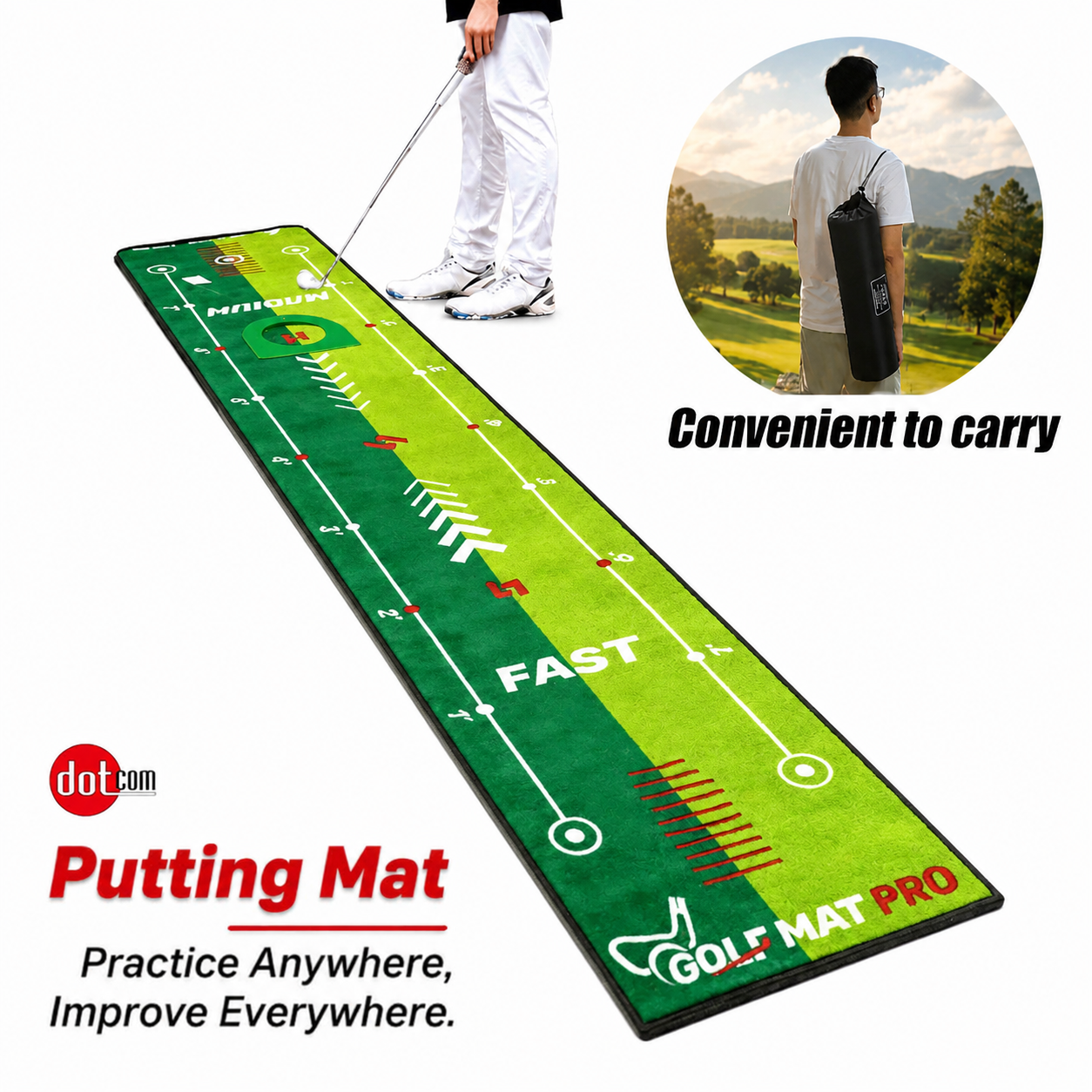
Why Flat Is Not Always Enough
A golf putting mat can look flat and still perform poorly. The floor underneath affects roll, and small wrinkles or bumps can push putts off line. Many players assume a putting mat is ready to use straight out of the box. In reality, the setup determines whether the practice feedback is useful or misleading.
The goal is to create a surface that behaves the same way on every putt. That requires checking the floor, removing debris, and letting the mat settle. A little preparation before practice prevents wasted reps on a surface that is not true.
Checking the Floor Before Unrolling
The first step is to inspect the area where the mat will sit. Hardwood, tile, laminate, and carpet all interact with the mat differently. A smooth hard floor is usually the easiest base. Carpet can work, but it may create a soft, inconsistent roll if the mat is thin.
Look for uneven spots, seams, and small objects under the mat. Even a tiny stone can create a hump that changes ball direction. Sweep or vacuum the area before laying the mat. If the floor has a visible slope, the ball will follow it, and no mat can fully correct that.
Aligning the Mat to Your Most Common Putt
Direction matters more than many players realize. If the mat is placed at a slight angle to the room, the body may align differently on each setup. That inconsistency can bleed into the putting stroke. It helps to align the mat with a known line, such as a floorboard seam, a wall, or a straight tape line.
The most common practice putt is usually a straight putt from three to ten feet. Set the mat so that this putt follows a line that feels natural. Avoid placing the mat where a window creates glare on one side. Shadows and light changes can affect how the ball and alignment lines are seen.
Managing Wrinkles and Edges
New putting mats often arrive rolled and need time to flatten. Unroll the mat and place it upside down for a while if the corners keep lifting. Some mats respond well to light warmth from the room, but direct heat should be avoided. Heavy objects placed along the edges can also help the mat settle.
If the mat has a rubber backing, make sure it is not folded under itself. A folded edge creates a raised section that will affect the ball. Check both ends and the sides before each session. The table below shows common setup issues and their effects.
|
Setup Issue |
Cause |
Effect on Practice |
Quick Fix |
|
Raised edge |
Mat not fully unrolled |
Ball starts off line |
Lay flat, weight edges |
|
Small bump |
Debris under mat |
Inconsistent roll |
Clean floor thoroughly |
|
Soft base |
Carpet underneath |
Slow, cushioned roll |
Use firmer mat or board |
|
Side slope |
Uneven floor |
Ball drifts consistently |
Move mat or level area |
Creating a Quiet Practice Zone
A putting mat works best when the surrounding area is stable. Foot traffic, moving shadows, and nearby clutter can distract from stroke work. The mat should be placed where the player can stand comfortably at one end and see the full length without twisting.
Leave enough space behind the ball for a normal stance and stroke. If the mat is placed against a wall or furniture, the stroke may become cramped. A quiet corner with consistent lighting helps the eyes read the line the same way every time.
Common Setup Mistakes That Reduce Value
One common mistake is leaving the mat rolled up between sessions. Repeated rolling and unrolling can create curls that take time to relax. If possible, leave the mat unrolled in a flat spot when not in use. Another mistake is using the mat on an uneven surface and blaming the stroke for inconsistent results.
Some players also place the ball in a different position each time. The mat should have a clear starting area or alignment mark. Without that, the setup changes from putt to putt. Practice becomes less repeatable, and the feedback loses value.
Dotcom’s golf putting mats are designed to settle flat and provide a consistent roll when placed on a suitable floor. A careful setup helps the mat do its job, which in turn makes each practice session more useful.